
Eliminating Thrashing
AI armor for your brain.

If you pay attention to my articles tagged self care you will know that I dealt with a very long illness, losing much of my career from 2007 until the summer of 2025. There wasn’t a standing long jump back to full time work in August of that year, I had a series of improvements thanks to periodic use of a nootropic called Noopept, which began in the spring of 2022.
While my physical health improved dramatically the last four months, so much so that I’m busy with a startup for the first time since 2001, artificial intelligence has been entwined in this process in several different ways.
This morning’s offering from AI guru Nate B. Jones puts words to something I’ve already been doing in fits and starts for a while. Let’s take a closer look …
Attention Conservation Notice:
Not a Nate employee, just a Nate stan. This is going to be full of cognition and sense making stuff. If you don’t feel like you have time to read this, you’d best get in here …
Video:
The premise is simple - “That which is measured, improves.” If you start paying attention to your attention, you’ll get more of it. A big part of my recovery this year, which I don’t say much about, is that I aggressively terminated any connection to the activist/hacker/politics realm during the summer. Everybody has problems, some people cause problems, and I escorted the latter out, along with all of their enablers.
λ/Δ/θ:
Nate based his video on The Math of Why You Can’t Focus at Work by Can Duruk and his post The focus system I borrowed from an engineer’s blog + 18 prompts to actually move the dials contains, surprisingly enough, a bundle of prompts to help you adopt his methods. This is the nexus of Duruk’s very engineer thinking - reducing productivity to a simple equation.
Lambda (λ): Interruption Frequency
Delta (δ): Context Recovery Time
Theta (θ): Minimum Deep Work Block Length
That’s enough source citation, if you want more productive time, listen to these two.
The World:
Most every post on this Substack has this construct right after the lede - a one liner on why you should, or more likely should NOT read what follows.
Attention Conservation Notice:
I stole this from Bruce Sterling’s Viridian design movement and it’s served me well. If you’ve ever perused the aging Hacker Cultural Attache Training folder, which was thrown together four years ago for some ARLIS people, you’ll notice there’s a lot of human cognition stuff in there. The CIA analyst bible isn’t a Jason Bourne movie script, it’s Psychology of Intelligence Analysis.
I’ve been thinking about this stuff pretty much since the start of my sense making career phase, which began in 2009. Prior to that I had five years of mindfulness practice, and that began concurrent with learning of Asperger’s Syndrome, a now discredited label for my personal patch of the autism spectrum.
As an autist, I practice “sense defense”. I work alone all but one day a week, in natural light, or with a small pool of light from a desk lamp. I will notice failing ballast resistors in fluorescent lights months before anyone else - most office environments are a horrorshow for those of us who lack a front end filter.
Me, Myself & AI:
What does AI contribute to me, personally, in this area?
Much of those lost years I had periodic cognitive deficits, long periods during most days in which I lost a lot of capability. I played with IQ tests one week, years ago, and found I took a forty point hit from what I now know to be MCAS episodes. Now I find that the Projects (Claude & ChatGPT), Spaces (Perplexity), and repositories(Antigravity) letting me store stuff, combined with the chat memory, means my time to come back to task is much shorter, and the machine keeps the context when I’m busy elsewhere.
While the brain fog has been almost entirely gone since August, and my interruptions are greatly reduced by expelling online conflict figures from my life, I have taken on an enormous swath of work. I have had to climb the learning curves for half a dozen technologies that would have each taken me a year to navigate through brain fog, and I’m by no means an expert, but I feel comfortable with them after just a few months. This is like a time machine back to the late 1980s, when I could ingest massive amounts of new stuff, thanks to that late teens/early twenties brain stuff.
Having this … cognitive prosthetic … is forcing me to think HARD about how I spend my time. I’ve always had more curiosity than I had the time and energy to service properly and that is a hazard. A three minute YouTube video on some obscure Cold War X plane that never made production can send me down an hour deep aerodynamic rabbit hole. I find myself having to enforce some mindfulness on what I am doing with these newfound capabilities.
Having two hundred dozen Maltego graphs lurking, having been the operator of Disinfodrome, being the author of Parabeagle, AND having Shall We Play A Game? rattling around in my head, I have a LOT of stuff in all sorts of formats. I’m trying to get double duty out of everything I do - last weekend I found an Obsidian vault MCP server that uses Chroma, and now I can bring the almost 900 things I preserved for SWPAG into the same environment, My day job, my avocation, and my passion project are all running together digitally, just as they do in my head.
Old School:
This is the latest advance in my daily activity. There is a connection between seeing something and writing it down by hand that is not activated by typing. The ratty full sized notebook that is sometimes a mouse pad has been joined by this little one with a binding that lets me easily remove pages. This is short term memory in physical form.
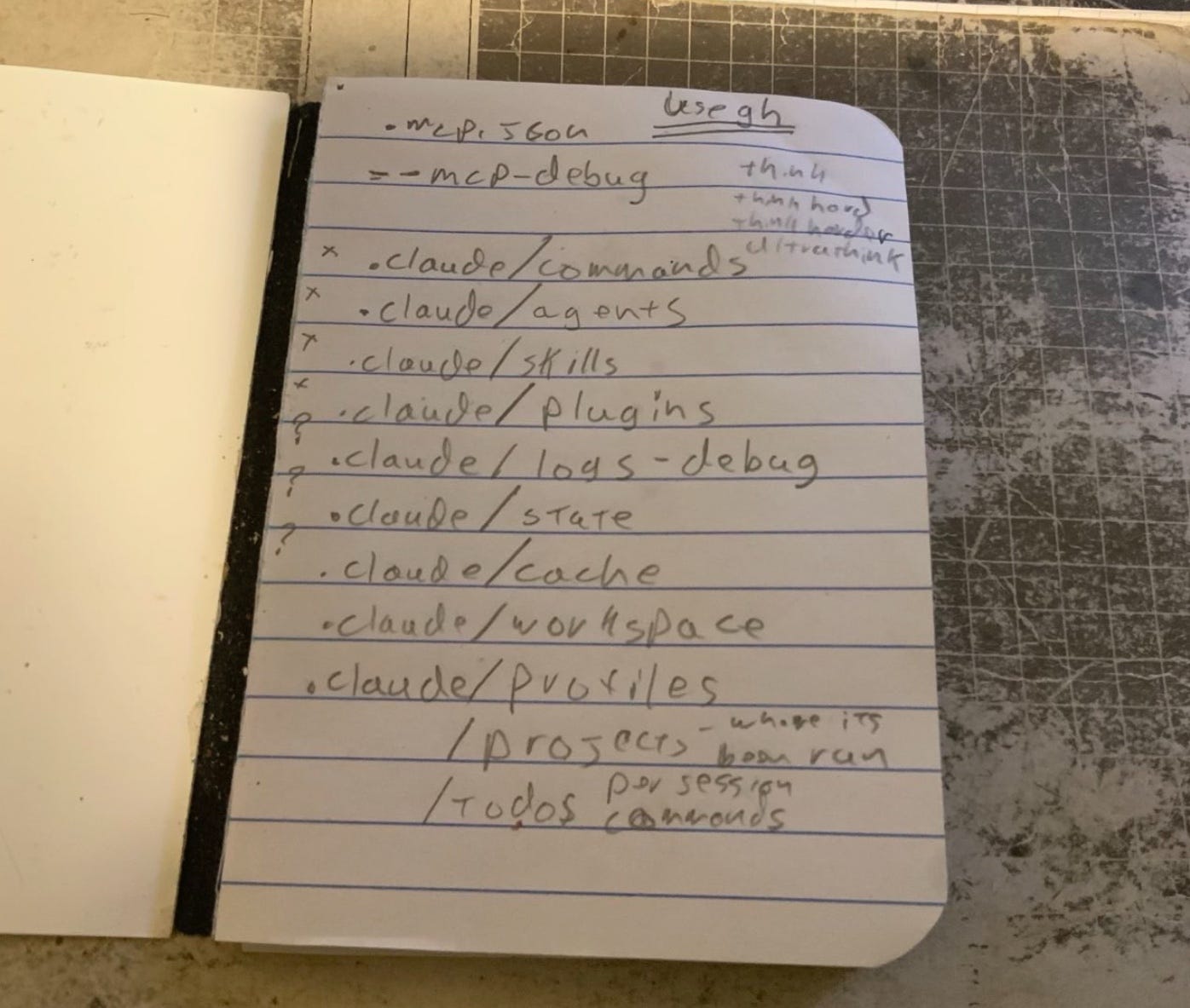
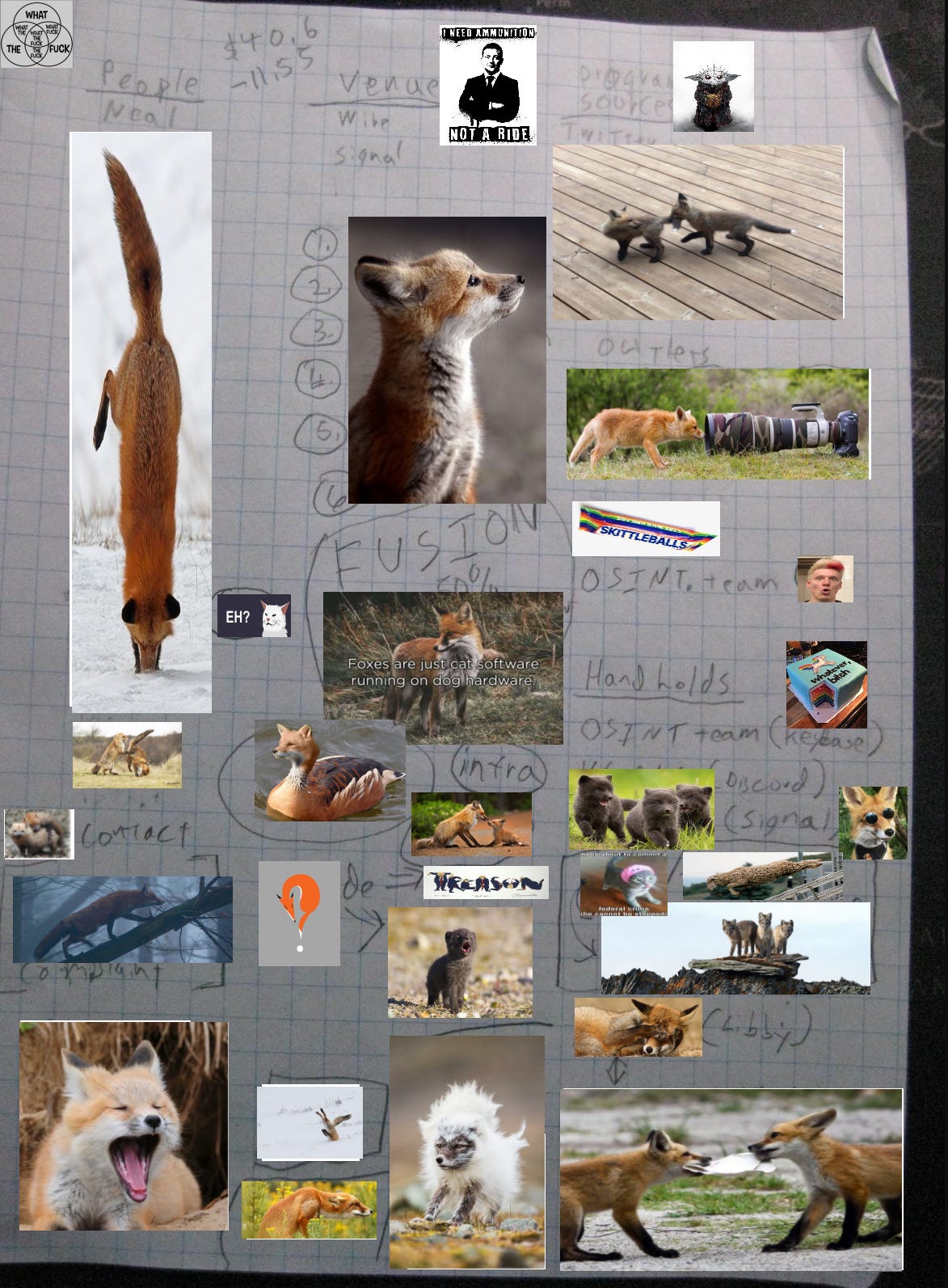
The little notebook is small enough that I am not tempted to do what happens with the big one - a specific project gets laid down on the top half of a page. The something perhaps related on the bottom. Then other small things will end up in various unused portions. Here’s a funny example of how that looks that dates back five or six years.
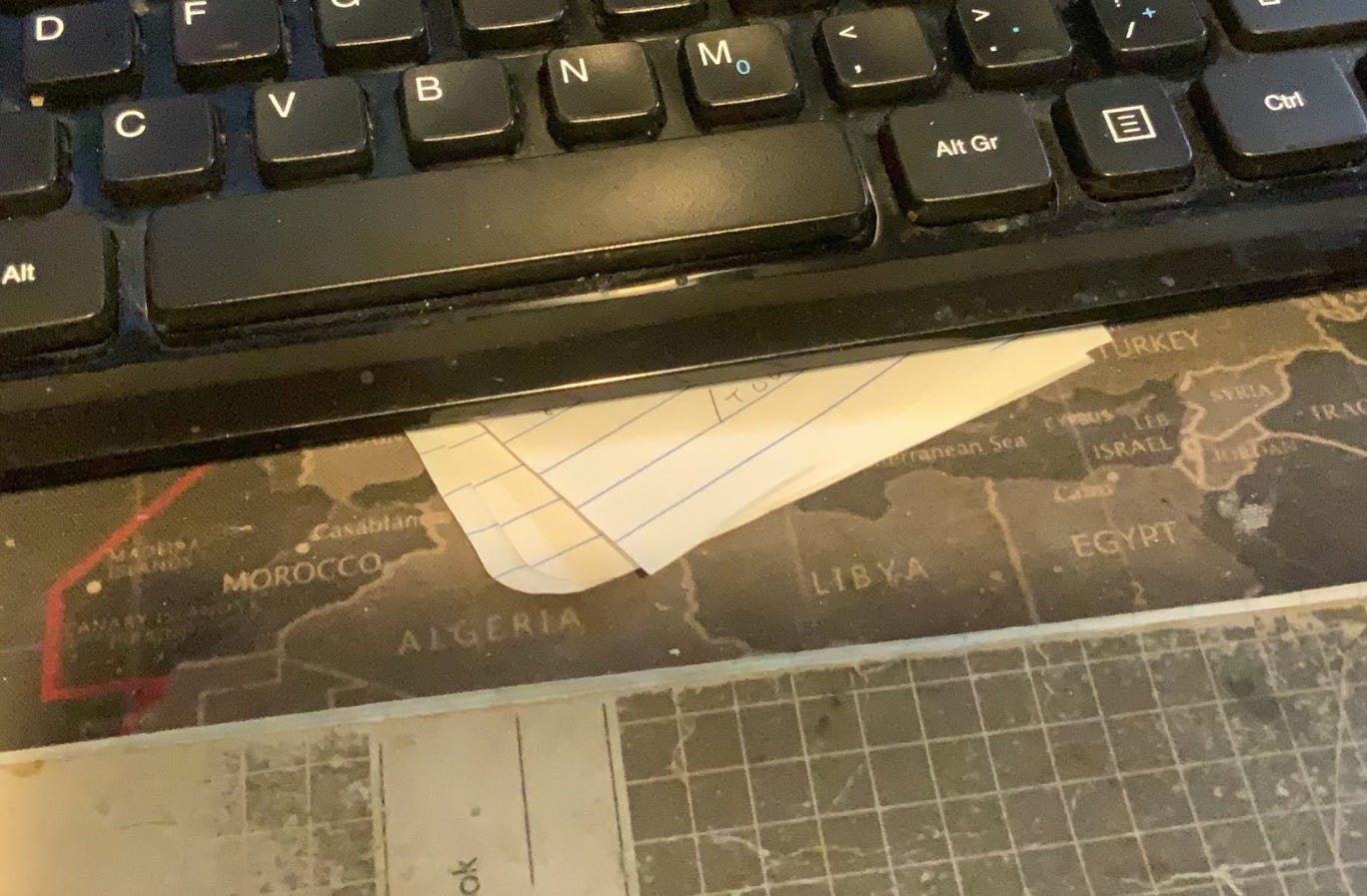
One those short term memories are complete, they get shuffled to long term memory, just as organic ones do in our brains …
Conclusion:
We are, all of us, thrashing like a 1980s minicomputer. Our memory is full and our multitasking is a lie, we spend half our time like Dory in Finding Nemo … OK, now where was I? The Ruins Of Your Attention Span are all you have left if you participated in the last twenty years of antisocial media. Unlike Neo coming out of that pod, nobody is coming to free your mind, you’re going to have to do that yourself.
So if you don’t already have a little black book on your desk, today would be a fine time to acquire one. The time you save will be your own.