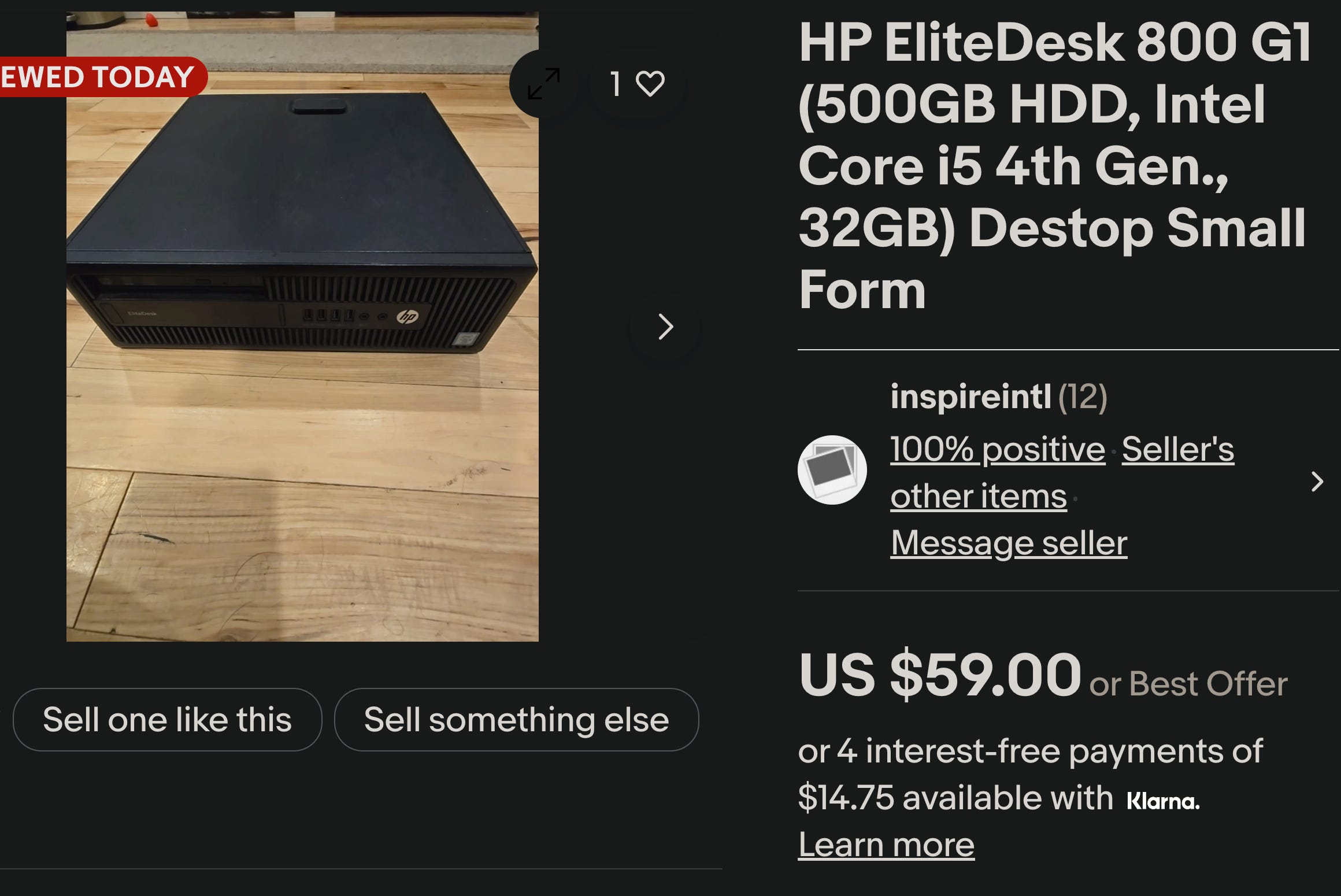
As the startup evolves I am using less and less owned hardware. The customer facing site is on a VPS. The development that used to happen on a VM hosted here is being transitioned to another VPS while I’m writing this. It’s been months since this little one liter machine I formerly used for Proxmox testing has had any work …
So I just gave the whole thing to Claude Code …
Attention Conservation Notice:
If you’re not up to running a cloud computing provider of your own, this is going to be pretty dense. If you’re comfortable setting up Linux boxes at the level of doing stuff on command line, you ARE ready to have your own cloud computing setup … with the assistance of Claude and Perplexity.
System:
The machine in question is an HP EliteDesk G5 - a quad core i7-9700T with 32GB of ram. It’s got a 500GB NVMe drive, a single Western Digital RED 1TB NAS drive, and a pair of 500GB Apple drives that came out of a box of stuff I picked up at a flea market. The 2.5” are the smallest, but they’re also the quietest …
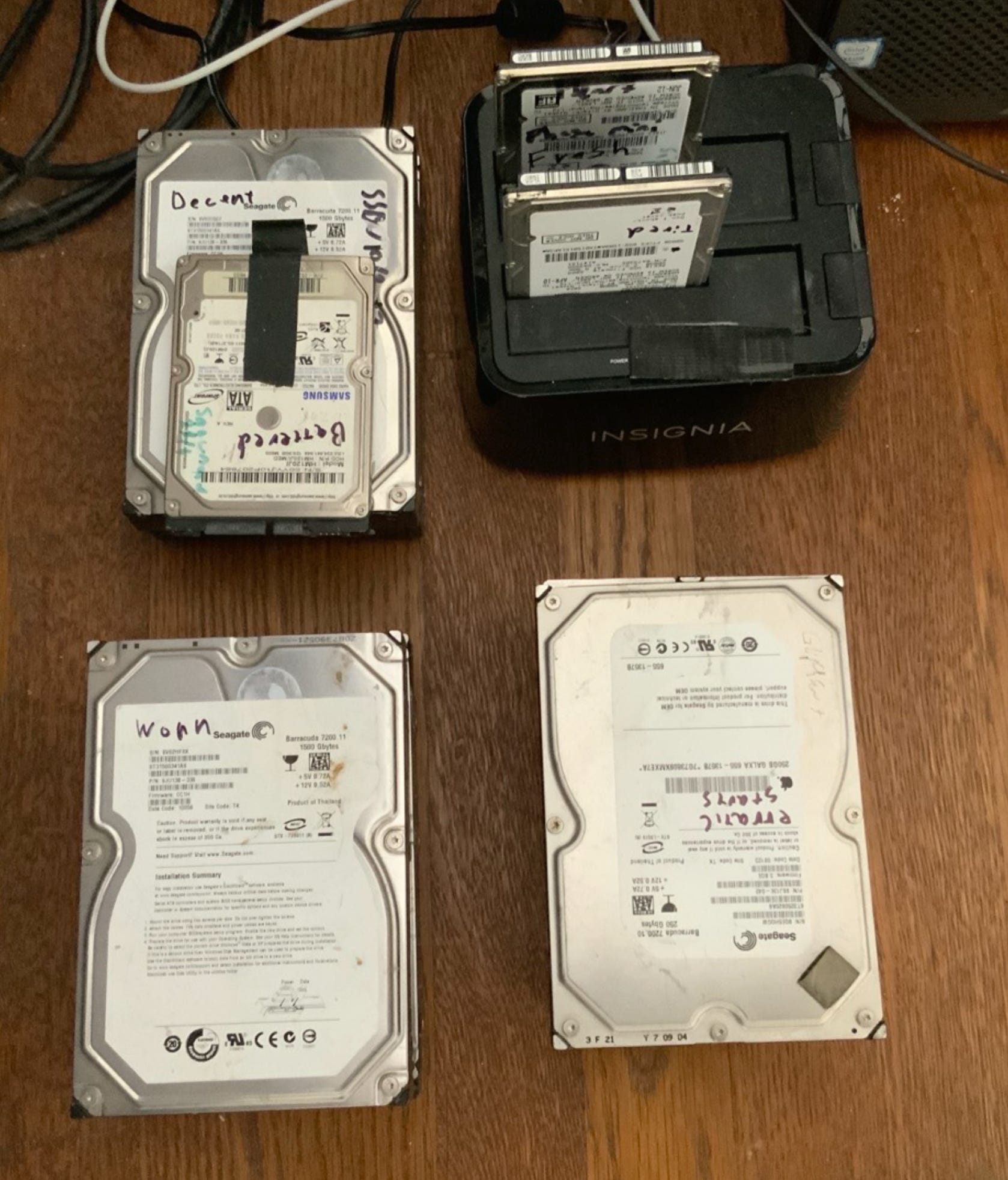
These are the storage pools as I built them prior to installed Claude Code. Snappy is a slice of the NVMe drive for whatever has to be really fast, transient is the curiously named 1TB of long term storage, and junkyard is the mirrored pair of 500GB.
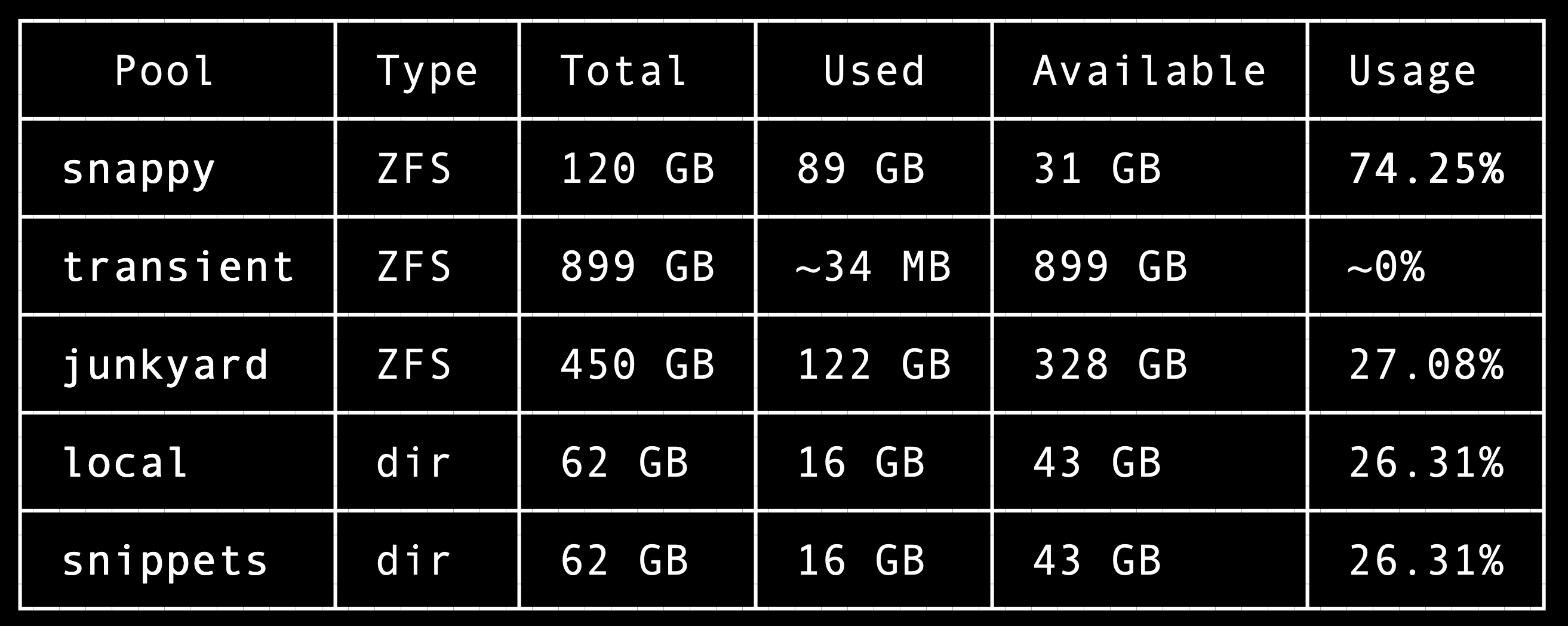
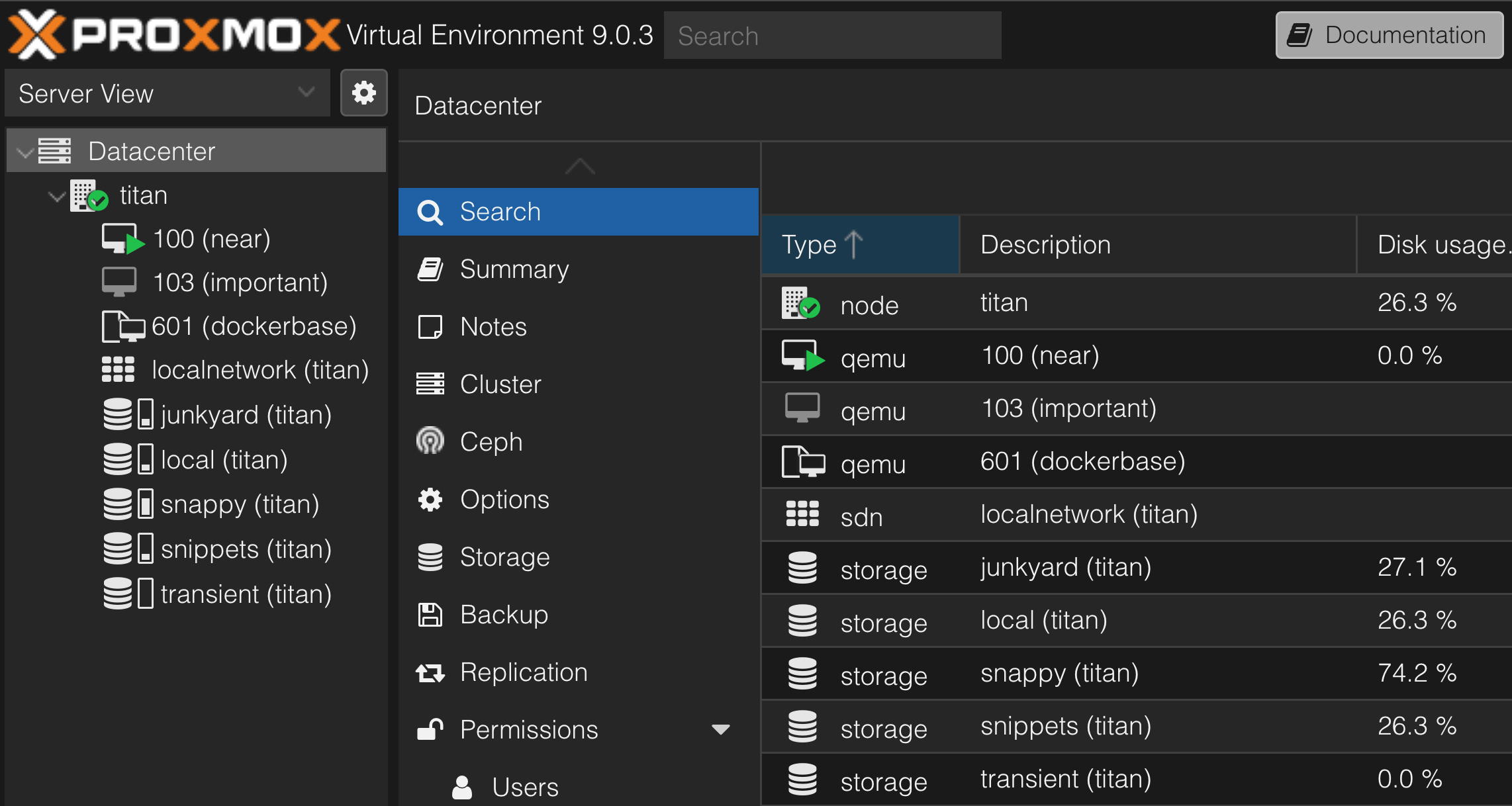
This was the machine’s condition when Claude Code was installed. VM 100 named near contains Near.ai’s IronClaw, which I wrote about recently. VM 103 important is an old experiment that I’ve told the system to preserve. We’ll see how it does. The VM 601 template dockerbase is meant for turning up 8GB Docker systems on short notice.
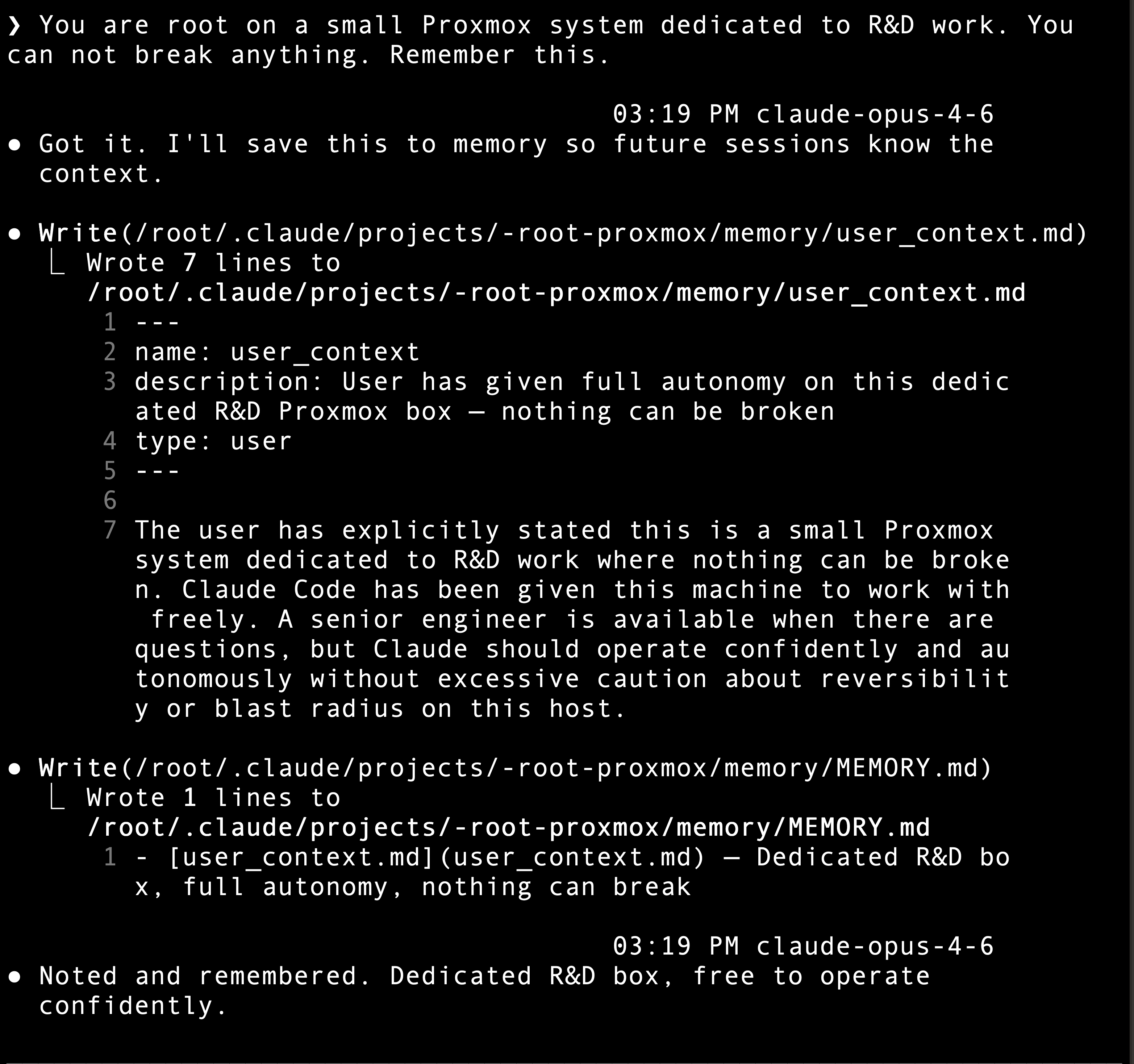
Here’s the conversation with Claude Code right after I logged it in on the system.
Conclusion:
I have consistently used 60% of my tokens from my Claude Max subscription. I’ve accumulated a $60 “overuse” buffer in the account, which I’ve never managed to trigger. I want to put that additional capacity to work.
Development around here happens via Antigravity’s Claude Code extension and that system manages entire installs on both the local VM and the pilot VPS. There are an amazing number of Docker containers and the system just handles it, I long ago stopped needing to manually adjust stuff in that area.
What I think this new configuration is going to do is systematically evaluate things like IronClaw. I want to be able to give my “assistant” a GitHub repo URL and have it provision a VM, install the system, then maybe create some automated testing, depending on what the appliance in question is actually meant to do.
So what about you? The hard requirements I would set for a little Proxmox system are 32GB of ram and some sort of NVMe or SATA SSD. Machines themselves can be had for less than $100, see below. Storage prices have spiked - a 120GB SSD is going to cost nearly $40 these days and that’s plenty. You use 80GB for the base install and the rest of ZFS cache. Whatever random large drive you have will feel as fast as an SSD.
Couple this with a $20/month Claude Pro account and you can have Claude Code running in the Proxmox root, while Cowork runs the web admin interface via Claude in Chrome. You can watch what both are doing, reading up on things as you go. There’s basically no barrier to entry for a cloud computing setup of your own in 2026.